Dial Tone Outlaws: How Rogue DJs Turned Dead Frequencies Into Living Empires
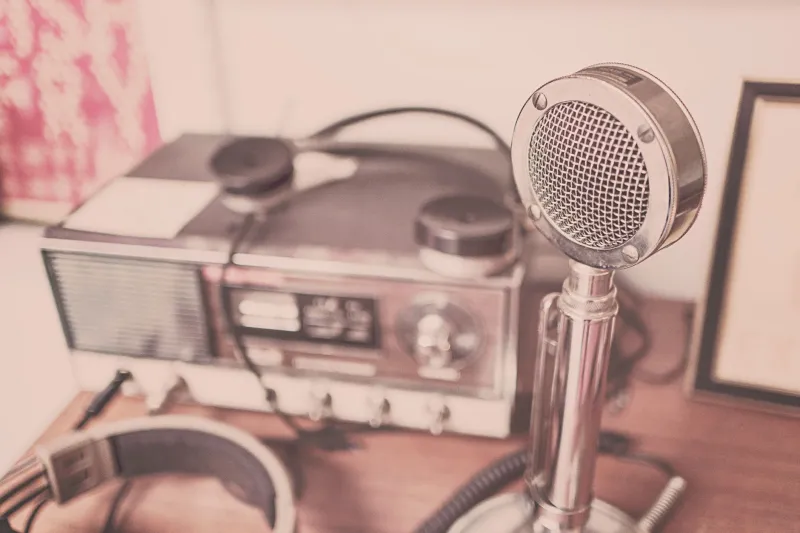
There's a particular kind of silence that exists between licensed radio stations — a narrow band of electromagnetic real estate that the FCC technically owns but nobody's really watching at 2 a.m. on a Tuesday. For about four decades, a rotating cast of technically gifted, culturally motivated, and legally unconcerned broadcasters made that silence their home. They built audiences without algorithms, ran stations without permits, and in more than a few cases, shaped the sonic identity of entire American cities without a single person in a glass-walled corporate office knowing their names.
This is the deep mechanics of pirate radio. Not the mythology — the actual playbook.
The Hardware Problem (And How They Solved It)
Running an unlicensed station in the 1980s wasn't as simple as plugging in a mic and hitting a button. The FCC's enforcement arm — the Enforcement Bureau — had mobile detection units that could triangulate a rogue signal's origin within a reasonable radius, given enough time and a strong enough transmission. So the first rule of pirate radio wasn't about content. It was about power output.
Most successful operations stayed under 100 watts, often significantly under. At that level, you could cover a few square miles in a dense urban environment — enough to reach a neighborhood, maybe two — without painting a bright target on yourself. Operators sourced their transmitters through surplus electronics markets, ham radio communities, and increasingly through mail-order catalogs that technically sold the components for "educational" purposes. By the late '80s, a functional FM transmitter could be assembled for under $200 in parts if you knew what you were doing.
The antenna placement was its own science. Rooftops were preferred over ground-level setups because height extended range without requiring more power. Some operators ran their signal through coaxial cable up elevator shafts in apartment buildings, keeping the actual broadcast hardware — the part that could get you in trouble — physically separated from wherever the DJ was actually sitting. Separation of signal source from broadcast point became a foundational tactic.
Time Is a Shield
The FCC doesn't operate like a 24-hour surveillance network. Enforcement actions required complaints, resources, and follow-through — all of which were unevenly distributed. Experienced pirate operators learned to exploit the gaps.
Late-night and early-morning windows, roughly midnight to 6 a.m., became the primary broadcast slots for stations that wanted longevity over reach. Fewer complaints meant fewer enforcement actions. And devoted listeners — the kind who actually cared about what was coming through their speakers — were often awake during those hours anyway. The audience self-selected. You weren't broadcasting to casual listeners; you were broadcasting to people who needed to hear what you were playing.
Some operations ran rotating schedules, never broadcasting from the same time slot two weeks in a row. Others went completely dark for months at a time when heat picked up, resurfacing on slightly shifted frequencies with new call signs and the same core crew. The FCC's institutional memory for small-market pirate operations was, historically, not great.
Community as Infrastructure
Here's the part that gets underreported when people talk about pirate radio: the technical stuff was almost secondary to the social architecture that kept these stations alive.
In New York City during the late '80s and early '90s, the Caribbean and Latin communities in neighborhoods like Flatbush, Washington Heights, and the South Bronx developed pirate FM ecosystems that functioned as genuine community infrastructure. Stations like Kool FM and a rotating constellation of Spanish-language operations served immigrant communities whose musical tastes, languages, and cultural reference points were essentially invisible on licensed radio. Listeners didn't just tune in — they protected the stations. Word traveled fast when enforcement vans were spotted in the area. Tipped-off operators could go dark in minutes.
This community protection network was replicated in Chicago's South Side, in parts of South Central Los Angeles, and in Miami's Little Haiti. The stations weren't just entertainment — they were proof that a community's culture was worth transmitting, literally.
The Chicago Blueprint
If you want a case study in pirate radio done with almost architectural precision, look at the house music ecosystem that developed around unlicensed Chicago FM operations in the mid-to-late '80s. While the Warehouse and the Music Box get most of the historical credit for incubating house music, the radio side of the story is equally significant and considerably less documented.
Operators broadcasting from the South Side and West Side ran irregular schedules, kept their wattage modest, and built listener loyalty through sheer programming quality. DJs who couldn't get shifts at licensed stations — which were deeply conservative about the new electronic music coming out of the club scene — found homes on the pirate dial. The feedback loop between club culture and unlicensed radio created a distribution network for new music that moved faster than any record label could manage.
By the time house music broke nationally, the Chicago pirate operators had already been its primary radio infrastructure for years. They just never got the credit line.
The Digital Transition and What Survived
The internet didn't kill pirate radio. It changed its shape.
The early 2000s saw a wave of pirate FM operations shift partially or entirely to internet streaming, which existed in its own legal gray zones but didn't carry the same FCC exposure. Some operators ran hybrid models — a low-power FM signal for the neighborhood, an internet stream for everyone else. The community-protection dynamics got more complicated when your audience was geographically dispersed, but the programming ethos survived the migration.
What's interesting is that the FM pirate tradition didn't disappear — it contracted and specialized. Today's unlicensed FM operators tend to be either deeply local community stations in underserved areas (some of which eventually pursued LPFM licenses when the FCC opened that pathway in 2000 and again in 2013) or deliberately ephemeral operations that exist more as events than ongoing broadcasts. A 48-hour pirate transmission tied to a specific cultural moment, then silence.
That's almost more honest to the original spirit than anything permanent would be.
The Signal That Outlasted the Station
What the pirate radio playbook ultimately demonstrates isn't just technical ingenuity under regulatory pressure. It's a specific theory of cultural distribution: that the scarcity and illegality of a transmission can itself become part of the message. You weren't just hearing music you couldn't hear anywhere else. You were participating in something that the official channels had decided shouldn't exist.
That friction — between the signal and the silence around it — is what turned listeners into communities and communities into movements. The FCC can regulate the airwaves. It's considerably less equipped to regulate what happens in the heads of people who heard something at 3 a.m. that they were never supposed to hear.
Some of those people are still chasing that frequency. You might be one of them.

