Your Old Radio Tower Is Watching You Now
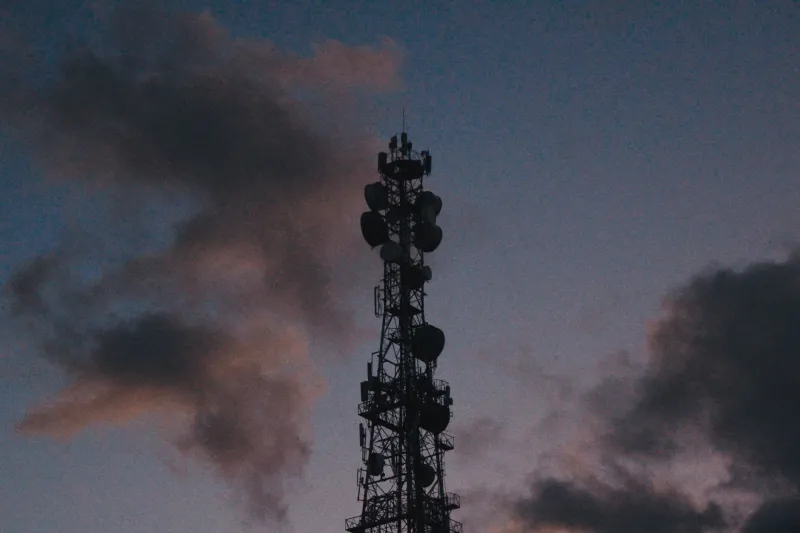
Somewhere in the flatlands outside Tulsa, there's a broadcast tower that hasn't legally transmitted anything since 2011. Its license lapsed. Its original operator dissolved. The land it sits on changed hands twice, and the current owner—a Delaware-registered LLC with no public-facing website—has shown zero interest in returning its calls to the FCC. By every official measure, that tower is dead.
Except it isn't.
According to three network engineers who spoke to Signal Void on condition of anonymity, that tower—and hundreds like it scattered across rural America—is now part of something nobody gave a formal name to until recently. The working term in certain corners of the telecom underground is passive frequency mapping. And if even half of what these sources describe is accurate, it represents one of the more quietly significant infrastructure pivots of the last decade.
What 'Passive' Actually Means Here
Most people think of broadcast infrastructure as a one-way street. Tower sends. Radio receives. Simple enough. But the hardware involved in transmission has always had a listening capability baked in—engineers use it for diagnostics, signal monitoring, interference detection. The equipment was never meant to be a surveillance tool. It just happens to be very good at one.
Passive frequency mapping, as described by sources familiar with the practice, involves configuring decommissioned or semi-active broadcast hardware to monitor ambient radio frequency activity across a geographic area without transmitting anything. The tower stops talking. It starts taking notes.
"You're essentially turning a megaphone into a very sensitive ear," said one engineer who spent twelve years working for a mid-sized regional broadcaster before moving to the private sector. "The hardware was always capable of this. Nobody bothered because there was no commercial reason to. Now there is."
That commercial reason, depending on who you ask, ranges from benign spectrum analytics sold to telecom firms, to something considerably less comfortable to think about.
The Data Nobody Is Accounting For
Here's where it gets complicated. RF monitoring at scale—capturing what frequencies are active, where, when, and with what signal characteristics—can reveal a surprising amount about human behavior. Device density. Movement patterns. Communication habits. You're not capturing content in the traditional wiretap sense, but the metadata picture that emerges from sustained passive monitoring of an area's radio environment is genuinely detailed.
Privacy advocates have been circling this issue for a while, though it rarely breaks into mainstream conversation. "There's no clean legal framework for this," said a policy researcher at a digital rights organization based in Washington, D.C. "The FCC governs transmission. The laws around passive listening at the infrastructure level are genuinely murky. You can make a credible argument that nobody's doing anything illegal, and that's exactly the problem."
The researcher pointed to a 2019 filing buried in FCC records—Signal Void reviewed it—in which a small telecom holding company applied to modify the operational parameters of seventeen acquired broadcast licenses across four states. The modification requests were largely technical and approved without fanfare. But read carefully, the changes described would have shifted those facilities from active transmission mode to what the filing called "monitoring-priority configuration." The FCC approved it. Nobody wrote about it.
Fringe Communities Saw This Coming
If mainstream tech media has been slow on this, the amateur radio community and certain corners of software-defined radio (SDR) hobbyist forums have not. SDR enthusiasts—people who use cheap USB dongles and open-source software to scan and visualize radio frequency activity—have been documenting anomalies for years. Signals that don't match any licensed source. Persistent low-level transmissions from towers that should be dark. Geographic clusters of RF activity that correlate with no known broadcast operation.
A Reddit community dedicated to SDR anomaly tracking—which we're deliberately not naming here, per the request of several members who spoke to us—has compiled what they call a "shadow infrastructure map" covering roughly 340 suspected passive monitoring sites across the continental US. Their methodology is informal and their conclusions are speculative. But the underlying observation—that something is happening at these sites—is harder to dismiss.
"I've logged the same low-power emission from a tower outside Harrisburg, Pennsylvania, every night between 2 and 4 a.m. for eight months," wrote one user in a thread from last fall. "It's not a licensed signal. It's not interference. It's structured. Somebody is running something there."
Who Owns the Infrastructure Matters
Tracing ownership of decommissioned broadcast infrastructure is its own rabbit hole. In the years following the digital television transition and subsequent radio consolidation waves, enormous amounts of tower infrastructure changed hands rapidly. Private equity firms, real estate holding companies, and telecom subsidiaries absorbed properties that the FCC's public records struggle to keep pace with.
Several of the towers flagged by the SDR community are currently owned by entities that, when traced through layers of LLC registration, connect to larger data analytics firms with known contracts in location intelligence—the industry term for commercially packaged human movement data.
None of this is proof of anything. It is, however, a pattern that nobody with institutional resources has chosen to investigate seriously.
"The story isn't that there's a conspiracy," said the network engineer quoted earlier. "The story is that the infrastructure for one exists and has been quietly assembled, and the regulatory framework to prevent misuse basically doesn't exist. That's not a conspiracy. That's just how these things go."
The Signal Void Angle
For a site that's spent considerable time documenting what happens in the spaces between official broadcast narratives, this one lands differently. We're not talking about rogue pirates or eccentric archivists or unlicensed micro-stations. We're talking about legitimate-adjacent infrastructure, legally acquired, operating in regulatory gray zones, potentially feeding data pipelines that nobody has meaningfully audited.
The towers that used to carry Top 40 hits to drive-time commuters outside Columbus and country stations to the Texas panhandle are still out there. Some of them are genuinely dormant. Some are being prepped for new licensed use. And some—according to people who've spent serious time watching the spectrum—are doing something else entirely.
The broadcast era built an enormous physical nervous system across this country. The question nobody is formally asking is who inherited that nervous system, and what they're using it to feel.
We'll keep listening.