They Heard It First: The Underground Audio Faithful Who Blueprinted Podcasting Before It Had a Name
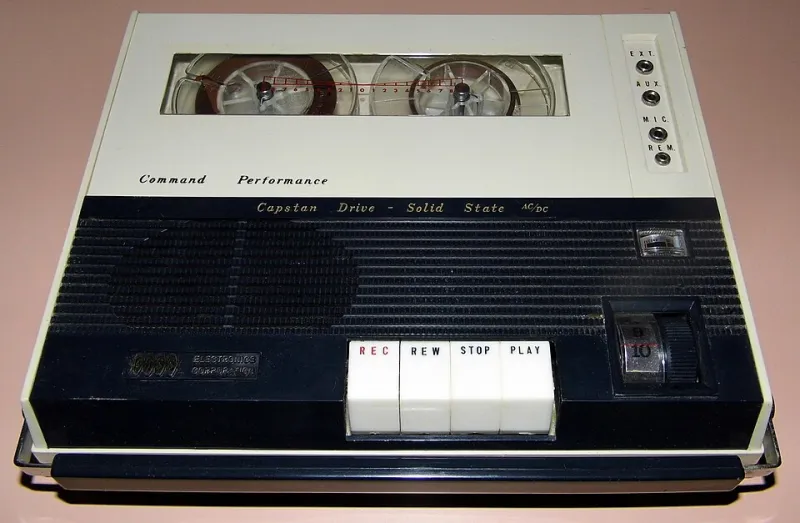
Photo: Joe Haupt from USA, CC BY-SA 2.0, via Wikimedia Commons
There's a version of history where podcasting was invented in a San Francisco office around 2004, named by a journalist, adopted by Apple, and then monetized into oblivion by people who'd never owned a shortwave radio in their lives. That's the version that gets cited in business school case studies.
Then there's the actual version.
The Frequency Before the Format
Sometime in the late 1990s, in the dead hours between midnight and 3 a.m., a scattered network of audio experimenters was doing something that didn't have a category yet. They were recording themselves — talking, ranting, playing music nobody else was playing — and then distributing those recordings through whatever channels would hold them. FTP servers. IRC drops. Burned CDs mailed to strangers in other states who'd posted on message boards with names like SoundUnderground and FreqWatch.
They weren't podcasters. The word didn't exist. But the behavior was identical.
What they were doing was treating audio like a publication. Episodic. Opinionated. Built for a specific audience that mainstream radio had already decided didn't exist or didn't matter. They were building subscriber relationships before Substack made that a personality type. They were obsessing over audio quality, pacing, and listener retention before 'CPM rates' became something audio people had to care about.
The communities that housed this activity weren't glamorous. Think: forums with default phpBB themes, Geocities pages with embedded MIDI, mailing lists that required a manual approval from a moderator who went by a handle like VoidCaster_88. Entry was earned, not purchased.
What the Forums Actually Said
People who were active in these spaces during the early 2000s — and a small number of them are still findable, still online, still irritated about the credit situation — describe a culture that was explicitly theorizing about what audio distribution could become.
One frequently referenced thread, archived in fragments across several Wayback Machine captures, laid out something eerily close to the modern podcast ecosystem: serialized audio content, voluntary listener support, searchable archives, and what the original poster called 'audience gravity' — the idea that a loyal, niche listenership was more valuable than a large, indifferent one. This was written in 2001. The iTunes Podcast Directory launched in 2005.
Pirate radio collectives on the East Coast were running what amounted to proto-podcast networks out of apartment buildings and community spaces. Shows had formats. Shows had regulars. Shows had, in at least a few documented cases, waiting lists of people who wanted to be on them. The infrastructure was chaotic and technically illegal, but the editorial logic was sound — and it was years ahead of what the industry would eventually 'discover.'
Why Silicon Valley Got the Credit Anyway
This is the part that requires some honesty about how cultural credit gets assigned in America.
The people building these early audio networks were not, by and large, plugged into the tech press ecosystem. They weren't attending South by Southwest. They weren't filing patents or writing white papers. They were making things for the love of making things and distributing them through channels that left minimal paper trails — partly by accident, partly by design.
When podcasting went mainstream, the story that got told was the one that had names attached to it. Names with LinkedIn profiles. Names that had given quotes to Wired. The underground audio faithful didn't have publicists, and the forums they'd built their world in were either dead or locked behind broken login systems.
This is not a new phenomenon. It is, arguably, the defining phenomenon of how American tech culture processes its own origins. The thing gets built in the margins, the margins get absorbed, and then the absorption gets called invention.
The Ones Who Almost Made It Into the Record
A few names from this era float up occasionally in the more obsessive corners of audio history discourse. There was a collective out of Chicago that was running a weekly serialized audio drama distributed via email attachment in 2000 — complete with sound design, recurring characters, and a listener Q&A segment at the end of each episode. There was a one-man operation out of rural Vermont who was recording long-form interviews with local musicians and mailing DAT tapes to anyone who sent him a self-addressed envelope with return postage.
Neither of these people became podcast pioneers in the official sense. Both of them, in different interviews conducted by different researchers at different times, described watching the podcast boom with a specific kind of recognition — the feeling of seeing your own handwriting on someone else's homework.
What the Signal Was Actually Carrying
Here at Signal Void, we spend a lot of time thinking about what gets transmitted versus what gets received — and more specifically, about who gets to decide which is which. The underground audio communities of the late '90s and early 2000s were transmitting something real. They had the theory right. They had the audience psychology right. They had the distribution instinct right.
What they didn't have was the moment. And the moment, when it came, arrived with enough institutional momentum that it could rewrite its own origin story in real time.
The podcasting industry is now worth billions. It has awards shows and trade publications and Nielsen ratings and venture capital and celebrity hosts who get paid more per episode than most of those early audio experimenters made in a decade of day jobs. None of that money trickled back. None of that credit got redistributed.
Frequencies Don't Lie
The interesting thing about audio is that it leaves traces even when no one's trying to preserve it. Tapes degrade but don't disappear entirely. Forum posts get cached. Someone always saved the file.
The record of what these communities built is incomplete, but it exists. It's sitting in archive.org captures and old hard drives and the memories of people who were there and have, for the most part, stopped expecting anyone to ask them about it.
They saw it coming. They built the thing. They handed it off — unknowingly, involuntarily — to an industry that then patented the concept of the door and forgot who made the house.
If you're listening on a podcast app right now, there's a decent chance the person who actually invented what you're doing is somewhere out there, still recording, still distributing, still not getting credit.
The frequency was always there. Someone else just figured out how to sell the receiver.