Rewired and Listening: The Analog Holdouts Who Say Digital Receivers Are Deaf to Half the Spectrum
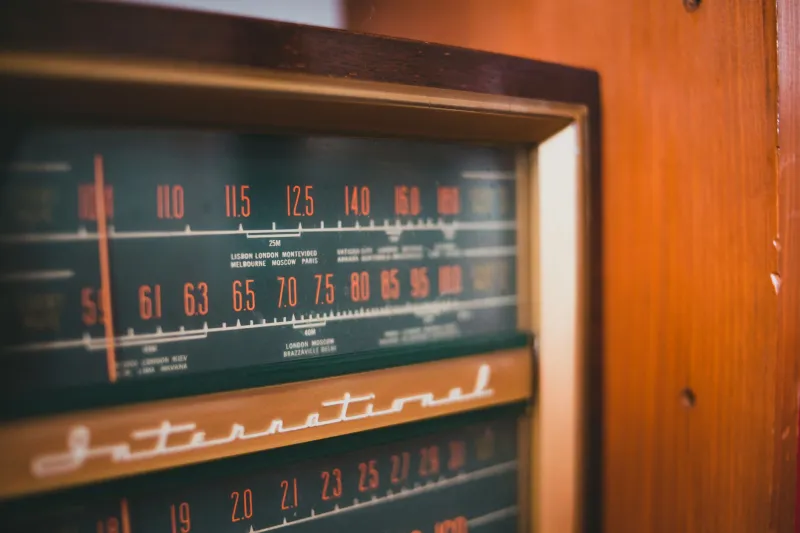
Somewhere in a suburb of Columbus, Ohio, a retired electrical engineer named Gary has a living room that looks like the back room of a radio repair shop from 1974. Marantz tuners stacked on shelves. A Kenwood from the late seventies with its back panel removed and a tangle of modified circuitry where the original IF stage used to be. Two oscilloscopes running continuously, their traces pulsing green in the dim light.
Gary is not a nostalgist. He's not in it for the warm sound or the aesthetic of analog gear. He's in it because he believes, with the conviction of someone who has spent forty years working with RF systems, that the receivers everyone uses now — the digital tuners, the software-defined radio setups, the HD Radio hardware — are functionally blind to a category of transmission that older equipment can still detect.
"It's not about sound quality," he says. "It's about sensitivity to a specific class of signal that modern DSP architectures filter out before it ever reaches the demodulation stage. They're not hearing it because they're designed not to."
The Technical Case
To understand what Gary and a growing community of like-minded hobbyists are arguing, you need a basic grip on how digital and analog tuners handle incoming signals differently.
A traditional analog tuner — the kind built in the 1960s through the 1980s — processes the incoming RF signal in a relatively unfiltered way through its intermediate frequency stage. It's not trying to be selective in the modern sense. It catches a wide swath of the electromagnetic environment and lets the listener's ear do some of the filtering.
Modern digital receivers, including software-defined radio platforms that hobbyists use, apply aggressive digital signal processing before anything reaches the output stage. This DSP is designed to reject noise, eliminate interference, and deliver a clean, intelligible signal. It does this extremely well. But the community around analog modification argues that in the process of cleaning things up, these systems are discarding signal components that don't fit the expected pattern of a conventional broadcast.
"The DSP is making decisions about what counts as signal and what counts as noise," explains one member of an online forum dedicated to analog receiver modification. "And those decisions are based on assumptions about what a broadcast transmission looks like. If something doesn't match that template, it gets thrown out. The old hardware doesn't have that filter. It hears everything."
What They're Finding
The community's shared discoveries, posted across several private forums and a handful of semi-public Discord servers, range from the mundane to the genuinely strange.
On the mundane end: legacy telemetry signals from infrastructure systems that were never officially decommissioned. Narrowband transmissions that appear to be automated status pings from remote equipment — weather stations, pipeline monitors, relay boxes — using modulation schemes that predate current standards. These are real, verifiable, and occasionally show up in FCC license databases if you know what you're looking for.
On the stranger end: a cluster of listeners in the Pacific Northwest have documented a recurring signal in the 75-meter amateur band that appears to encode data in a format nobody in the community has been able to fully decode. It surfaces roughly every eleven days, lasts between four and seven minutes, and has been recorded consistently enough that several members have built dedicated monitoring setups to catch it.
There are also accounts — harder to verify, more contested within the community itself — of what some members describe as "ghost carrier" signals: weak, apparently unmodulated carriers that appear at frequencies adjacent to active broadcasts and disappear when approached with a directional antenna.
The Modifications
The hardware work these enthusiasts are doing is not simple. It requires a working knowledge of analog circuit design, the ability to source components that haven't been manufactured in decades, and a tolerance for the kind of iterative failure that comes with modifying equipment that was never designed to be modified.
The most common modification involves replacing or bypassing the original IF filter stage with a wider-bandwidth alternative. This increases the receiver's sensitivity to off-standard signals at the cost of selectivity — the tuner becomes harder to use in dense RF environments because it picks up more interference. For serious listeners, this is a feature, not a bug.
Some builders go further, adding custom front-end amplifiers tuned to specific frequency ranges, or replacing the original detector circuits with designs that respond to modulation modes the original hardware wasn't built for.
"My current setup took about eight months to get right," says a hobbyist in rural Vermont who goes by the handle Ferrite_Prophet online. "I'm running a modified Realistic DX-160 with a completely rebuilt IF section and a custom detector that I designed based on some old military receiver schematics I found in a university library archive. It hears things my SDR setup doesn't even register."
The Skeptical View
Not everyone in the broader amateur radio community buys the premise. The skeptical argument is straightforward: what these modified receivers are picking up is almost certainly interference, intermodulation products, or the receivers' own internal noise floor being misinterpreted as external signals.
"Widening your IF passband doesn't reveal hidden transmissions," one experienced amateur radio operator wrote in a forum thread debating the community's claims. "It makes your receiver worse at rejecting interference. The 'signals' they're finding are artifacts of the modification itself in a lot of cases."
This is a legitimate technical critique. And it's one the analog modification community doesn't fully dismiss — there's ongoing internal debate about methodology, about how to distinguish genuine external signals from receiver artifacts, and about the standards of evidence that should apply before a claimed detection gets treated as real.
Why It Matters
Even if the most dramatic claims in this community turn out to be receiver noise mistaken for transmissions, the underlying technical question they're raising is genuinely interesting: what does the electromagnetic environment actually contain that our current receiver architectures aren't designed to capture?
The history of radio is full of signals that existed long before anyone built equipment sensitive enough to detect them. The cosmic microwave background was background noise for decades before anyone understood what it was. The question of what's currently sitting in the spectrum, undetected by standard equipment, isn't inherently fringe.
Gary in Columbus knows how this looks from the outside. He's not bothered.
"Everyone who's ever found something real in the spectrum looked crazy until they didn't," he says, adjusting a trimmer capacitor on the Kenwood with a plastic screwdriver. "I'm not claiming I know what I'm hearing. I'm claiming I'm hearing something. That's enough to keep going."