Pushed Into the Void: How a Bad Notification Sent Thousands Down the Frequency Rabbit Hole

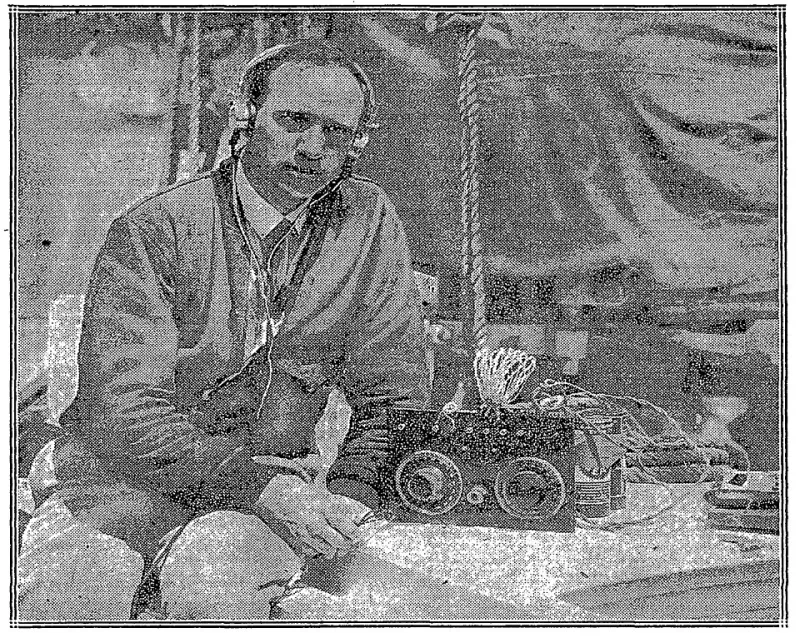
Photo: PattayaPatrol, CC BY-SA 4.0, via Wikimedia Commons
Nobody schedules their obsession. You don't block off a Tuesday afternoon to fall permanently in love with something strange. It just arrives — usually uninvited, usually through a screen you were barely paying attention to, usually disguised as a mistake.
That's the story a surprising number of self-described frequency obsessives are telling these days. Not the old-school shortwave hunters who grew up with a transistor radio pressed to their ear in a childhood bedroom. Not the ham radio lifers with callsigns older than some state highways. We're talking about a newer, younger, weirder cohort — people who got here through a corrupted Spotify queue, a misfired YouTube recommendation, or a push notification that pointed somewhere it clearly wasn't supposed to.
The algorithm, it turns out, occasionally slips. And when it does, some people never quite find their way back.
The Misfire That Changes Everything
Ask around in the right corners of Reddit — the ones with subscriber counts in the low four figures and posting rules that seem designed to confuse newcomers — and you'll collect stories like these faster than you'd expect.
A woman in Columbus, Ohio describes getting a podcast notification for a show she'd never subscribed to. The episode was forty-seven minutes of what sounded like maritime weather reports layered over a faint, rhythmic clicking. She listened to the whole thing. The show had no other episodes. The account has since disappeared. She's been chasing that sound ever since.
A college student in Portland got an auto-generated Spotify radio station based on a single obscure ambient track he'd played once. Buried in the third hour of that station — past the generic drone music and the lo-fi study beats — was something that didn't belong: a looping broadcast fragment, unmistakably old, with a voice reading strings of numbers in a flat Midwestern accent. He screenshotted the track info. The metadata listed the artist as a single punctuation mark.
These aren't isolated glitches. They're entry points.
Algorithmic Accidents and the Illusion of Intent
Here's where it gets genuinely interesting, and a little philosophically uncomfortable. When you ask these newly minted frequency obsessives whether they think the discovery was random, a meaningful chunk of them hesitate before answering.
The hesitation is the tell.
Streaming platforms run on recommendation engines trained on behavioral data so granular it would make a Cold War surveillance analyst weep with envy. These systems don't really misfire in the dramatic sense — they optimize toward engagement, and engagement sometimes means serving up something slightly off-center to see if you bite. What looks like a glitch from the user's end might be an intentional edge-case test from the platform's side. Or it might genuinely be corrupted metadata. Or it might be something a third-party uploader embedded deliberately, knowing full well that the algorithm would eventually carry it somewhere unexpected.
The line between accident and intention, in this context, is genuinely blurry. And that ambiguity is fuel.
The Notification as Invitation
Push notifications are a particularly strange vector for this kind of discovery. They're designed to be ignored — that's basically their entire cultural role at this point. We've trained ourselves to dismiss them reflexively, which means the rare notification that actually catches your attention has already beaten enormous odds.
Several of the people Signal Void spoke with described their entry point in almost identical terms: a notification that felt wrong. Not malicious, not alarming — just slightly off. Wrong time of day. Wrong app. A description that didn't parse correctly. One guy in Atlanta got a news alert from an app he'd deleted months earlier, pointing to an audio file that no longer existed at the linked URL. He spent three weeks trying to find out what had been there.
He didn't find it. He found something else instead. He's still looking.
There's a particular psychological texture to this kind of discovery that differs from intentional exploration. When you go looking for obscure audio content on purpose, you're a tourist with a map. When the content finds you through a broken system, you feel less like a tourist and more like someone who's been selected. That feeling — irrational, unverifiable, completely compelling — is what converts a casual listener into a true obsessive.
What the Old Guard Makes of All This
The shortwave veterans and pirate radio historians have complicated feelings about the new wave of frequency hunters who arrived through a Spotify glitch rather than a Radio Shack kit.
Some are dismissive in the way any subculture gets when the barrier to entry collapses. The argument goes: if the algorithm handed it to you, you didn't really earn it. Real signal seeking requires hardware, patience, and a working knowledge of propagation patterns. You can't stumble into the void — you have to build your way in.
But others see it differently. A longtime pirate radio documentarian based in the Pacific Northwest — who asked not to be named, naturally — put it this way: the signal doesn't care how you found it. The frequency doesn't check your credentials. If you heard something that rewired you, you're in. The door doesn't care which side you entered from.
That's a generous read, but it tracks with something real. The obsessive quality that defines serious frequency culture — the compulsive need to keep listening, to document, to decode, to find the source — shows up just as strongly in the Columbus woman chasing a phantom maritime broadcast as it does in someone who's been scanning shortwave bands since the Reagan administration.
The Infrastructure of Accidental Discovery
What's actually changed is the infrastructure. Streaming platforms have created an enormous, poorly mapped territory where audio content of wildly varying origin coexists under the same interface. Major label singles sit next to field recordings sit next to content of genuinely unclear provenance. Metadata is inconsistent, moderation is uneven, and the recommendation engine connects dots that no human curator would think to connect.
That's a landscape purpose-built for accidental discovery. The old shortwave dial had gaps and dead zones and strange signals bleeding across borders — but you had to go looking. The new version of that experience is ambient. It finds you while you're doing something else.
For the people it catches, the effect is the same: a sudden awareness that there is more signal out there than the official channels want you to notice. That some of it is strange. That some of it is old. That some of it doesn't have a clean explanation.
Once you've heard it, you can't really unhear it.
Still Receiving
The Columbus woman still has the screenshot of that podcast episode. The Portland student exported his Spotify history and has been cross-referencing the metadata anomaly against databases of documented number station broadcasts. The Atlanta guy rebuilt the deleted app from a cached version and found a completely different notification system underneath the one he'd been using.
None of them found what they were originally looking for. All of them are still looking.
That's how it works. The void doesn't give you answers. It gives you better questions, delivered through a glitchy push notification at 2 a.m., from an app you don't remember installing, pointing at a frequency you can't quite locate.
Some people close the notification. Some people follow it all the way down.
You already know which kind you are.