Hidden in Plain Hearing: The Audio Engineers Burying Secret Messages Inside Your Favorite Streams
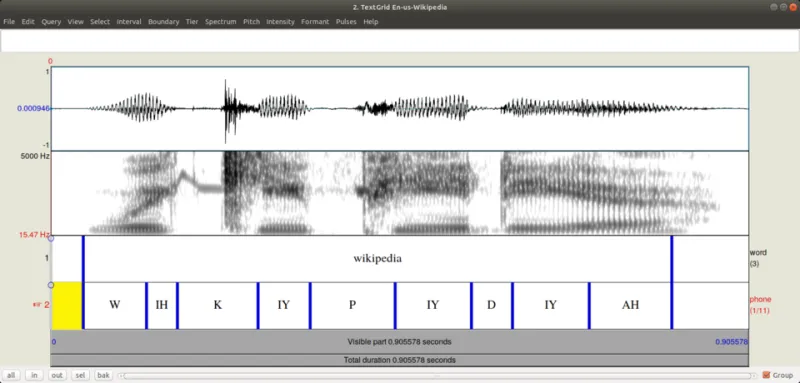
Photo: User:Wugapodes, LGPL, via Wikimedia Commons
You pressed play. You nodded along. Maybe you added it to a playlist. What you almost certainly didn't do is run the track through a spectrogram analyzer, isolate the 18–20 kHz frequency band, and check for patterns that don't belong there.
Most people don't. That's sort of the point.
A small but apparently growing community of audio engineers — working anonymously, communicating through encrypted channels, releasing music through entirely conventional platforms like Spotify and Apple Music — says it has been doing exactly this: hiding structured data inside commercially distributed songs. Not in the lyrics. Not in the album art. Inside the sound itself, tucked into frequency ranges the human ear doesn't consciously register.
They call it sonic steganography. And if even half of what they're describing is real, it represents one of the stranger information delivery systems operating in plain sight right now.
What Steganography Actually Means (and Why Sound Is Perfect for It)
Steganography — the practice of concealing a message within a non-secret carrier — is older than the internet by several centuries. Ancient Greeks reportedly shaved the heads of messengers, tattooed instructions on their scalps, and waited for the hair to grow back before sending them on their way. The idea has always been the same: the best hidden message is one nobody suspects exists.
Digital steganography has been a known practice in image files for decades. Researchers, intelligence agencies, and hobbyists have long used the excess data capacity in JPEG or PNG files to smuggle text, documents, even executable code. Audio files, though, offer something images don't: time. A four-minute song contains an enormous amount of data — and not all of it is doing obvious work.
The auditory system has hard limits. Human hearing generally tops out somewhere between 16 and 20 kHz, though that ceiling drops significantly with age. Below the threshold of conscious perception, there's usable space. And in the sub-bass ranges — frequencies felt more than heard — there's even more room to work with.
Modern lossy compression formats like MP3 discard a lot of this material. But lossless formats, and increasingly the high-fidelity streaming tiers offered by platforms like Tidal and Apple Music's Lossless tier, preserve it. According to the engineers Signal Void spoke with — none of whom agreed to be named — that preservation is exactly what makes the current moment interesting.
The Producers Who Won't Say Who They Are
We reached three separate individuals through an intermediary who monitors niche audio forums. All three described themselves as working or formerly working in professional music production. All three declined to identify themselves, the artists they work with, or the specific tracks they claim to have modified.
What they did agree to discuss was method.
"The software exists, it's not even that hard to find," said the first contact, who communicates through a pseudonym we agreed not to repeat. "There are open-source tools that have been around for years. The gap is knowing where to put the data so it survives the encoding process."
This is the core technical challenge. Most streaming platforms re-encode uploaded audio — running it through their own compression pipelines before it ever reaches a listener's ears. Embedding data that survives that process requires knowing, in advance, exactly what the platform will and won't strip out. According to our contacts, this knowledge is hard-won and closely shared within their network.
A second contact described a process of essentially stress-testing embedding techniques against platform infrastructure — uploading test tracks, pulling them back down, analyzing what survived. "It took about eight months to get reliable results on one major platform," they said. "Different platforms behave differently. Some are much more aggressive."
The third contact was more philosophical about the whole thing. "The message isn't always text," they said. "Sometimes it's a tone sequence. Sometimes it's a timestamp. The people who are supposed to find it know what they're looking for."
Who Is Supposed to Find It?
This is where things get genuinely murky — and where Signal Void's natural skepticism kicks in pretty hard.
The engineers were vague, and deliberately so, about the nature of the audience they're communicating with. References were made to "communities" and "circles" without any specifics. One contact mentioned that the decoding tools circulate through private Discord servers and encrypted messaging apps. Another suggested that some of what's embedded isn't meant to be decoded at all in the traditional sense — that the presence of the signal is itself the message.
That last part sounds like art-project logic, which may be exactly what it is. It's worth noting that sonic steganography has a legitimate experimental music history. Artists in the noise and drone scenes have been embedding visual images in spectrograms for years — Aphex Twin famously hid a face in the frequency data of a track back in 1999, discoverable only with the right software. What these engineers are describing is a more structured, more intentional version of that tradition, oriented toward communication rather than pure aesthetic gesture.
Or so they say.
The Decoding Community
Separate from the producers themselves, there appear to be listener communities actively developing tools to find this stuff. Forums dedicated to audio analysis — some overlapping with the audiophile world, some closer to ARG (alternate reality game) communities — have been documenting suspected instances of embedded data in released music for at least two years.
The methodology varies. Some users run tracks through spectrogram software and screenshot anomalies. Others write custom scripts to isolate specific frequency bands and look for non-random patterns. A few have claimed, in posts that tend to disappear quickly, to have successfully decoded what they describe as coherent strings of text or numerical sequences.
None of these claims have been independently verified. The nature of the thing makes verification difficult — if the data is only meaningful to a specific recipient with a specific key, outside confirmation is structurally impossible.
Which is, again, sort of the point.
Why It Matters Beyond the Weirdness
Leave aside whether any of this is real, or art, or an elaborate shared fiction. The underlying capability is documented and functional. Sonic steganography works. The tools are real. The technical constraints are real and have real workarounds.
What's being described here — a covert data channel running through a legal, commercial, globally distributed medium — is notable regardless of who's using it or why. If independent audio engineers can do this, so can anyone else with the knowledge and the patience. Researchers studying digital communication security have flagged audio steganography as an underexamined vector for years. The mainstream conversation just hasn't caught up.
And in the meantime, someone may be leaving breadcrumbs inside the songs on your morning commute playlist. You'd never hear them. That's the whole design.
The signal is there. The question is whether you're the intended receiver.