Ghosts in the Spectrum: Meet the Underground Collectors Preserving Radio's Forbidden Archive
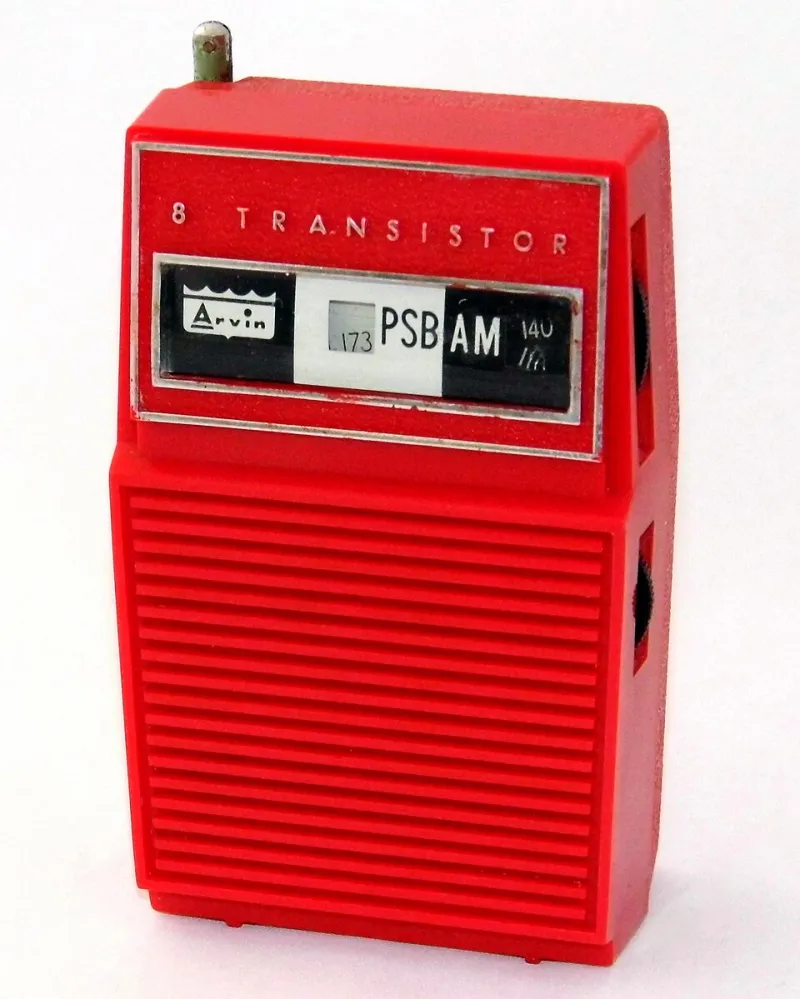
Photo: Joe Haupt, CC BY-SA 2.0, via Wikimedia Commons
There's a guy in rural Ohio — we'll call him Dex, because that's what he goes by in the forums — who hasn't slept past 4 a.m. in roughly six years. Not because of insomnia. Because that's when the interesting stuff comes through.
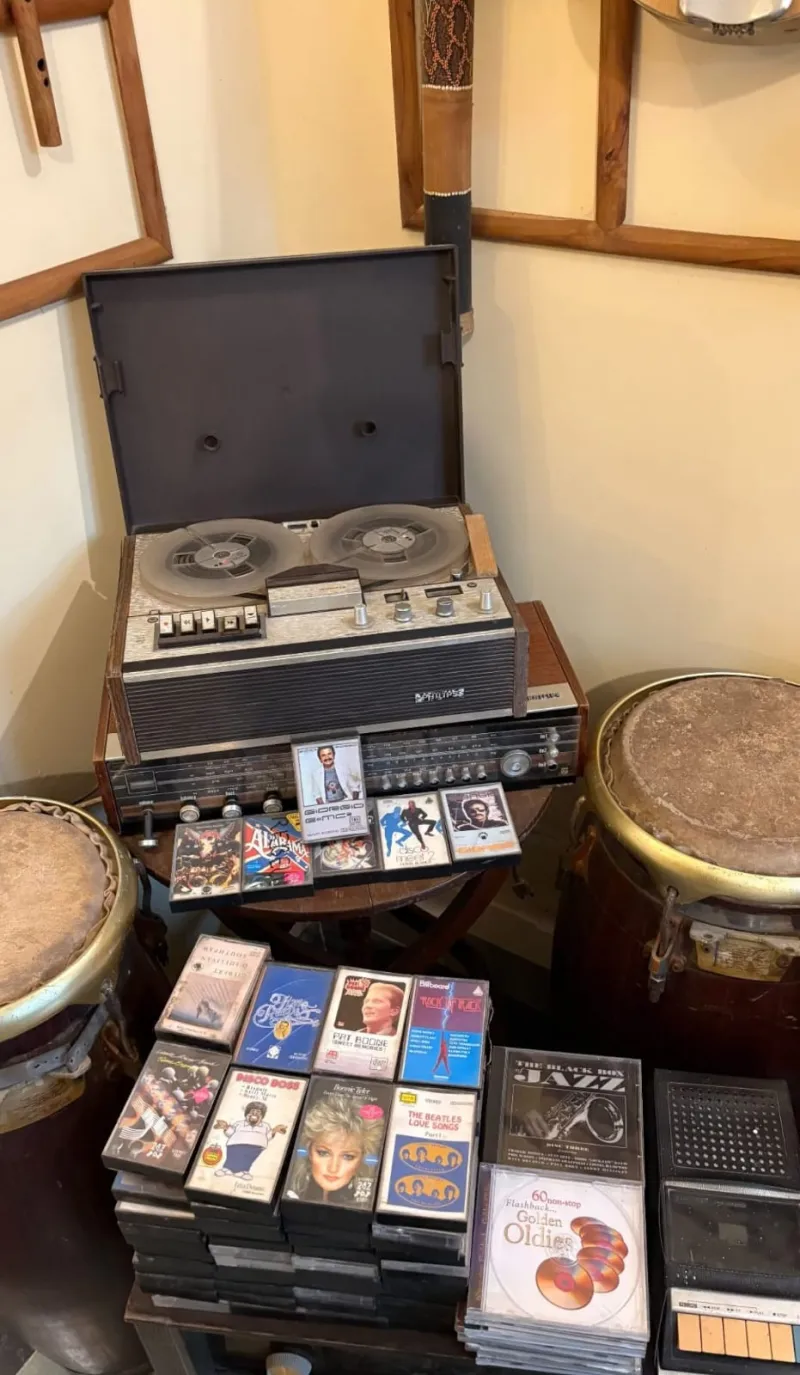
Dex runs a modified software-defined radio setup out of a converted storage shed behind his house. Three antennas. Two laptops running continuous capture software. One ancient reel-to-reel that he swears "catches things the digital rigs miss." His hard drives hold somewhere north of 14 terabytes of recorded transmissions — most of them unauthorized, many of them unidentified, and a handful that he describes, with complete seriousness, as "legally complicated to even discuss."
He is not alone. Not even close.
The Collectors You've Never Heard Of
Across the United States — and stretching into Canada, Mexico, and a few corners of the Caribbean — there exists a sprawling, deliberately disorganized community of people who do more or less what Dex does. They record radio. Not licensed radio. Not NPR, not Clear Channel, not your local sports talk station. They record the stuff that isn't supposed to be there: pirate broadcasts, ghost frequencies, number stations that officially don't exist, encrypted data bursts, analog holdouts operating on dead bands, and transmissions that defy easy categorization.
They call themselves different things depending on which corner of the community you find yourself in. Signal hunters. Spectrum documentarians. Phantom archivists. One faction operating out of the Pacific Northwest refers to their collective, with apparent sincerity, as "the library."
What unites them isn't ideology or even a shared aesthetic. It's a bone-deep conviction that the radio spectrum contains a living, breathing cultural record that no official institution is bothering to preserve — and that if they don't catch it, it disappears forever.
Why Unauthorized, Specifically
Fair question. There are plenty of legal radio recordings out there. The Internet Archive hosts thousands of hours of licensed broadcasts. Old-time radio enthusiasts have been digitizing vintage programming for decades. So why the specific fixation on the unlicensed stuff?
The answer, according to the collectors who were willing to talk to us, is partly practical and partly philosophical.
On the practical side: nobody else is doing it. Licensed stations have legal obligations to maintain certain records. Pirate broadcasters, rogue transmitters, and unregistered operators have no such obligations — and every incentive to leave no trace. When a pirate station goes dark, it goes dark completely. No archive, no record, no proof it ever happened. The phantom archivists see themselves as filling a vacuum that would otherwise be total.
On the philosophical side: the unauthorized stuff is, in their view, where the actual culture lives. One archivist based in the Chicago area — who agreed to communicate only through an encrypted messaging app and asked to be identified only as "Meridian" — put it this way: "Licensed radio is the official story. What we record is everything that didn't make the cut. The weird, the marginal, the stuff that was too raw or too niche or too legally questionable to survive. That's the real history."
The Technical Infrastructure of Invisibility
Staying invisible is a genuine operational concern for these collectors, and the community has developed a fairly sophisticated toolkit for managing it.
Software-defined radio — SDR for short — is the foundational technology. A basic SDR setup is cheap, flexible, and can be configured to scan enormous swaths of spectrum automatically, flagging anomalies for closer attention. More serious collectors run custom scripts that filter out known licensed frequencies and flag anything operating outside expected parameters.
But the hardware is almost secondary to the network infrastructure. Sharing collections is where things get genuinely intricate. The community relies heavily on a patchwork of private forums, encrypted file-transfer protocols, and invitation-only spaces that surface briefly and then migrate when they attract unwanted attention. Several collectors mentioned using modified peer-to-peer systems with additional anonymization layers. One described a distribution method that involved physically mailing hard drives between trusted contacts — a kind of sneakernet for the surveillance-averse.
The recordings themselves are cataloged with obsessive precision. Timestamps, GPS coordinates of the receiving antenna, signal strength readings, frequency, modulation type, any identifying content that could help pin down the source. Some collectors maintain searchable databases that would embarrass a professional archivist. Others organize their archives intuitively, in systems that make sense only to them.
"The cataloging is half the point," Meridian told us. "A recording with no context is just noise. A recording with full metadata is a document."
The Risk Calculation
It would be naive to pretend there's no legal dimension here. The FCC takes a dim view of interfering with licensed spectrum operations, and the legal status of simply recording unauthorized transmissions exists in a genuinely murky gray zone. Most collectors are careful to stay on the receiving end of things — they're not transmitting, not interfering, not doing anything that looks like active participation in whatever they're capturing.
But "murky gray zone" is not the same as "safe," and the community knows it. Several collectors mentioned being deliberately vague about their locations online. Others described purging portions of their archives periodically — not because they wanted to, but because holding certain recordings felt like holding something that could eventually attract the wrong kind of attention.
Dex, back in Ohio, says he's thought about this a lot. "There's stuff on these drives I'd have a hard time explaining to a lawyer," he admits. "Not because I did anything wrong. Because the existence of the recording implies I was listening to something I maybe wasn't supposed to be listening to. The line between documentation and evidence is thinner than people think."
What They're Actually Finding
So what's in these archives? The collections vary wildly. Some are dominated by pirate music stations — the kind of hyper-local, genre-specific broadcasts that existed for a few weeks or months before going silent. Others focus on what the community calls "data ghosts": burst transmissions carrying encoded information, origin unknown, purpose unclear, that appear on dead bands and then vanish.
A subset of collectors are specifically interested in what they believe are vestigial number stations — Cold War-era encrypted broadcast systems that various intelligence services ran for decades. The official position is that most of these are defunct. The collectors are not convinced.
And then there are the genuinely weird ones. Transmissions that don't fit any known format. Signals that appear to be looping audio from decades past. Broadcasts in languages that don't match any expected geographic origin for that frequency. Dex has a folder he refers to only as "the unexplained" that he estimates contains about 200 hours of material he can't account for at all.
"I'm not saying it's anything crazy," he says, with the careful phrasing of someone who has thought about how this sounds. "I'm saying I don't know what it is. And I'm saying nobody else was going to write it down."
A Library Nobody Sanctioned
There's something genuinely compelling about what these collectors are building, even if — maybe especially because — it exists entirely outside any official framework. No grants, no institutional backing, no preservation mandate from anyone with authority to issue one. Just a distributed network of obsessives with hard drives and antennas, convinced that the unauthorized margins of the spectrum contain something worth saving.
Whether they're right is almost beside the point. The archive exists. It's growing. And somewhere out there, at 4 a.m. on a Tuesday, Dex is still listening.