Off the Grid, On the Air: Inside the Micro-Station Movement the FCC Can't Quite Catch

Photo: WGBH Educational Foundation, Public domain, via Wikimedia Commons
Somewhere in the high desert of eastern Oregon, a transmitter the size of a shoebox is pushing a signal across roughly eleven miles of scrubland. It plays cumbia on weekend mornings, local obituaries on Tuesday afternoons, and a rotating cast of community announcements that no commercial station would touch. Nobody who runs it will give you their real name. The FCC, as far as anyone can tell, doesn't know it exists.
This isn't a story about one rogue DJ with a grudge against the establishment. It's about a sprawling, loosely organized ecosystem of micro-broadcasters operating across the United States — in agricultural valleys, post-industrial neighborhoods, reservation land, and forgotten rural corridors — that has quietly become something closer to infrastructure than rebellion.
The Regulatory Blind Spot Nobody Talks About
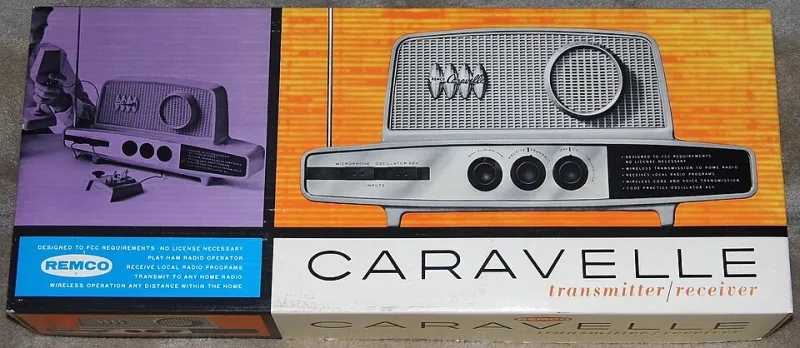
The Federal Communications Commission licenses radio spectrum with what it considers a fairly tight grip. Part 15 of its rules technically allows low-power transmitters without a license, but caps their range at something like a few hundred feet — barely enough to reach your neighbor's kitchen. Anything beyond that requires paperwork, fees, and a bureaucratic process that can take years and still end in rejection.
What the rulebook doesn't account for is terrain, atmospheric ducting, and the fact that a $200 FM transmitter paired with a half-decent antenna can, under the right conditions, cover a surprisingly wide radius. Operators in this space know the physics better than most licensed engineers. They've had to.
"The FCC maps coverage based on theoretical models," says one operator — we'll call him Terrance — who runs what he describes as a community information station in a rural Mississippi county. "Those models assume flat land, standard equipment, average conditions. Out here, none of that applies. We're in a river valley. The signal bounces weird. They'd have to physically drive around with detection equipment to find us, and they've got bigger problems."
He's not wrong about the agency's capacity. The FCC's enforcement bureau is understaffed relative to its mandate, and unlicensed broadcasting, while technically illegal above Part 15 thresholds, tends to rank below spectrum interference affecting aviation or emergency services. Small community stations operating on unused commercial frequencies in low-density areas often fall into a practical enforcement gap that looks, from the outside, a lot like tolerance.
What These Stations Actually Do
It would be easy to romanticize this as pure counterculture. Some of it is. But a lot of what these micro-stations broadcast is aggressively mundane in the best possible way — school cancellations, crop reports, church service times, local weather that the National Weather Service doesn't granularize enough to be useful.
In parts of Appalachia, unlicensed stations have filled the void left when local AM stations flipped to Spanish-language formats or went dark entirely after consolidation swallowed their parent companies. In South Texas border communities, they broadcast in regional Spanish dialects that commercial stations don't bother to serve. On several Native American reservations, micro-broadcasters operate in Indigenous languages that haven't had dedicated airtime since federal budget cuts guttered tribal broadcasting grants in the early 2000s.
"We're not trying to be pirates," says a woman who operates a station serving a Diné-speaking community in the Four Corners region. She asked to be identified only as a community member. "We're trying to be radio. The license system wasn't built for places like this. It was built for cities with ad revenue."
The Low Power FM license category, created by the FCC in 2000 and expanded under the Local Community Radio Act of 2010, was supposed to address some of this. And it has — partially. But LPFM licenses are still competitive, still require technical showings that can be prohibitive for volunteer-run operations, and still leave significant geographic and demographic gaps. The micro-station world exists in those gaps.
The Technical Sophistication Hiding in Plain Sight
Forget the image of a kid with a RadioShack kit and a dream. The operators running durable, long-term unlicensed stations tend to be technically fluent in ways that would surprise most people. They monitor their own signal strength to stay below thresholds likely to trigger complaints. They use directional antennas to limit spillover into licensed spectrum. Some rotate frequencies on a loose schedule. A few have moved to internet streaming as a backup, distributing the signal through apps while keeping the terrestrial broadcast as a local anchor for listeners without reliable broadband — which, in rural America, is still a lot of people.
"I've got a guy in our network who used to work for a broadcast engineering firm," says Terrance. "He volunteers his time. He knows exactly where the line is, technically speaking. We stay on the right side of it as much as we can."
The phrase "our network" is worth sitting with. These stations aren't entirely isolated. There's a loose, informal community — online forums, encrypted chats, occasional in-person meetups at conferences adjacent to legitimate community radio gatherings — where operators share technical knowledge, warn each other about enforcement activity, and sometimes share programming. It's not a conspiracy. It's more like a trade association that can't officially exist.
The Cat-and-Mouse That Isn't Really a Chase
The FCC does pursue enforcement actions against unlicensed broadcasters. It issues warning letters, levies fines, and occasionally seizes equipment. In densely populated markets — Miami, New York, Los Angeles — where unlicensed stations are more likely to cause actual interference with licensed operations, enforcement is more aggressive. The agency has made a point of publicizing crackdowns in those cities.
But for the scattered micro-stations in low-density areas? The chase is less a sprint than a slow walk in the general direction of a moving target. Several operators described receiving warning letters years apart, with no follow-up after an initial response claiming the equipment had been shut down. Whether the equipment actually was shut down is, in some cases, a matter of interpretation.
"They sent us a letter once," says one operator in rural Georgia. "We wrote back. Said we'd looked into it. They never came back out. That was four years ago."
This isn't to say the risk is zero. Operators in urban areas, or those who create actual interference, face real consequences. And the FCC has shown willingness to escalate when political pressure pushes it to. But for now, in the spaces between licensed signals, the micro-station world keeps transmitting.
Why It Matters
There's a version of this story that's just about regulatory arbitrage — people bending rules because the rules are inconvenient. But that framing misses what's actually happening on the ground. In communities where local media has been systematically defunded, consolidated, or never existed in the first place, these stations are doing work that nobody else is doing. They're broadcasting in languages the market doesn't value. They're covering events that don't generate clicks. They're keeping frequencies warm in places the industry wrote off.
Signal Void has been interested in the edges of the broadcast world for a while now. This is one of those edges. It's not clean, it's not legal in any strict sense, and it's not going away. The FCC can map the licensed spectrum all it wants. The unlicensed parts of the dial have their own geography — and their own people keeping it alive.