Still Transmitting: The Illegal Frequencies America Can't Seem to Kill
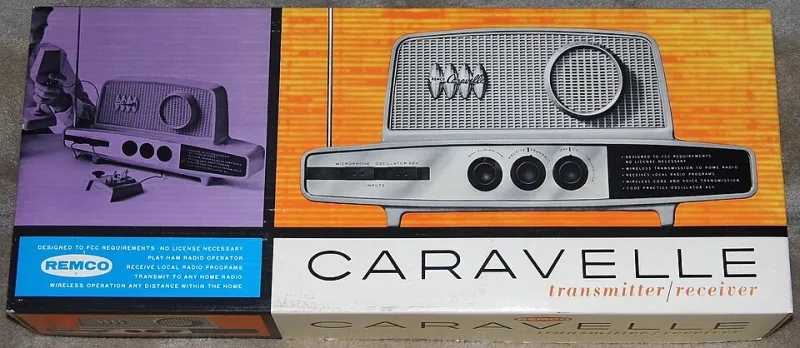
Photo: Joe Haupt from USA, Public domain, via Wikimedia Commons
There's a stretch of the FM dial — somewhere between a classic rock station you've heard a thousand times and a Spanish-language evangelical broadcast — where something strange lives. It doesn't have a call sign. It doesn't have a license. Some nights it plays lo-fi jazz. Some nights it reads poetry in a voice that sounds like it's coming from inside a parking garage. Some nights it's just a hum.
And it has been there, in various forms, for over thirty years.
The FCC knows about frequencies like this one. They've known for a long time. The question — and it's a genuinely interesting one — is why they keep coming back.
The Map Nobody Publishes
If you know where to look online, you can find communities of what some call "frequency hunters" — people who spend their off-hours scanning the dial with software-defined radio equipment, cataloging signals that have no official owner. It's part hobbyist culture, part archival obsession, and part something harder to name. Cultural archaeology, one hunter in the Pacific Northwest described it to us, half-joking.
"I've been doing this for eleven years," she said, preferring to go by her handle, Mireille_77. "I've logged over four hundred distinct unauthorized transmissions across twenty-two states. Some of them have been running continuously — or close to it — since before I started. That's not an accident. That's infrastructure."
She's not wrong. The persistence of these signals is one of the weirder facts about American radio culture. The FCC has real enforcement teeth: fines starting at $10,000 per violation, equipment seizure, federal charges in egregious cases. And yet, the signals persist. They migrate. They go quiet for a few months, then reappear on a slightly different frequency, often with the same audio fingerprint — the same reverb, the same dead air cadence, the same inexplicable three-second tone that precedes every broadcast.
Why the FCC Can't Just Turn It Off
The short answer is resources. The FCC's Enforcement Bureau is responsible for the entire electromagnetic spectrum across a country of 330 million people. Unauthorized FM broadcasts are, in the grand regulatory scheme, a relatively low priority compared to GPS interference, illegal cell jammers, or commercial spectrum violations worth billions of dollars.
The longer answer is geography and ingenuity. Many of these phantom operations run on low-power equipment — sometimes as little as one watt — which limits their range but also makes them genuinely difficult to triangulate. A signal that only reaches six city blocks in a dense urban neighborhood might take a field agent days to pin down, and by the time the paperwork clears, the transmitter has moved.
"They're not stupid," said a former FCC field agent who asked not to be identified. "The people running these things have been doing it long enough to know the playbook. Solar-powered rigs in remote locations. Timers that shut everything down if the broadcast pattern gets disrupted. I've shown up to coordinates that were perfect six hours earlier and found nothing but a dead tree and a tire track."
It's a cat-and-mouse dynamic that, depending on who you ask, is either a minor nuisance or a kind of low-stakes folk art.
Art Project or Infrastructure?
That question — nuisance or art — gets complicated fast when you start looking at what some of these frequencies actually broadcast.
In Chicago's South Side, frequency hunters have documented a recurring signal that transmits original music, almost exclusively from local artists who have no other distribution. No streaming profiles, no social media presence. Just the signal. Researchers who've tried to trace the music have hit dead ends; the artists, whoever they are, appear to exist only in the broadcast.
In rural Tennessee, a frequency that's been active in some form since the mid-1990s alternates between old-time gospel recordings and what sounds like field recordings of weather — rain, wind, the specific acoustic signature of a screen door in a thunderstorm. Nobody has claimed it. Nobody seems to know who runs it. It just transmits.
Mireille_77 has a theory about cases like these. "Some of them started as pirate radio in the political sense — community broadcasting, giving a voice to neighborhoods that commercial radio ignored. But they kept going after that moment passed. They became something else. Something more like a signal for its own sake."
That resonates with how certain corners of the internet talk about these frequencies — less as illegal activity and more as a form of transmission art, a genre that exists precisely because it can't be easily monetized, platformed, or explained.
The Legal Gray Gets Grayer
Not every phantom frequency is technically illegal, which adds another layer to the whole thing. Part 15 of the FCC's rules allows unlicensed low-power transmissions under strict power limits — limits so strict that most people assume they're useless. But creative operators have found ways to push those limits without technically crossing them: antenna configurations, terrain exploitation, daisy-chained transmitters spaced just far enough apart to each stay legal while collectively covering real ground.
"There's a whole engineering subculture around this," said one hobbyist who runs what he insists is a fully Part 15-compliant music station out of his garage in Albuquerque. "People share schematics online. It's like hot-rodding, but for radio. You're not breaking the law. You're just really, really committed to the letter of it."
The FCC has, in the past, expressed skepticism about some of these configurations. But prosecuting them requires proving intent and technical specifics that are genuinely difficult to establish in court.
Why It Matters
Here's the part that's easy to miss if you're just skimming the surface: these frequencies aren't a nostalgia project. They're not people who couldn't figure out how to start a podcast. They represent something more specific — a deliberate choice to use a medium that is, by design, local, ephemeral, and unarchivable.
You can't subscribe to a phantom frequency. You can't algorithm-recommend it. You have to be in the right place, with the right equipment, at the right time. That's not a bug in the system. For the people running these signals, it's the entire point.
In an era when every piece of content is tracked, cataloged, and fed back to you in a loop designed to maximize engagement, there's something genuinely strange about a broadcast that exists only when you happen to find it — and disappears the moment you try to hold onto it.
Mireille_77 put it plainly: "The signal doesn't care if you're listening. It's not trying to grow its audience. It just transmits. I find that kind of beautiful, honestly."
Somewhere out there right now, on a frequency that officially doesn't exist, something is broadcasting. Whether anyone is listening is almost beside the point.