Voices From Nowhere: The Obsessive Hunt to Decode Radio's Most Stubborn Mystery
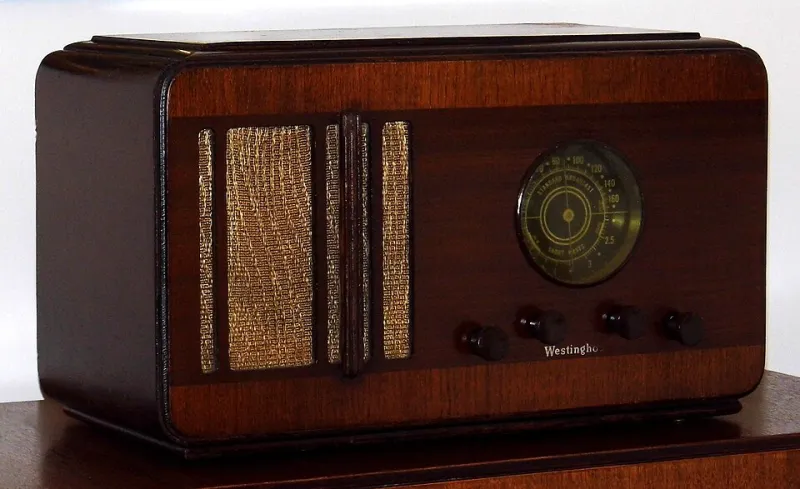
Photo: Joe Haupt from USA, CC BY-SA 2.0, via Wikimedia Commons
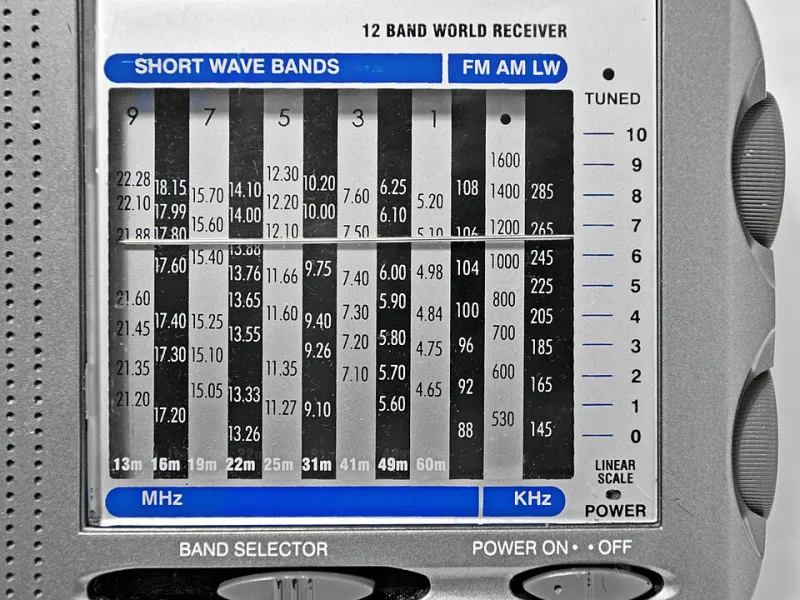
Turn a shortwave radio to the right frequency on the right night and you might catch it — a flat, synthetic voice, sometimes female, sometimes child-like, reading off a sequence of numbers in Spanish or German or Slavic-accented English. No context. No sign-off. Just digits, repeating, and then silence. It's been happening for at least seventy years. It's still happening now.
Numbers stations are one of those things that sound like a Reddit creepypasta until you actually sit down with a receiver and hear one yourself. Then they stop being a curiosity and start being something harder to shake.
What They Actually Are (Probably)
The working theory — supported by declassified intelligence documents, a handful of confirmed spy cases, and general consensus among serious researchers — is that numbers stations are one-way encrypted communication tools used by intelligence agencies to contact field operatives. The logic is elegant and old: a spy in a foreign country tunes to a frequency, hears their personal coded message buried in a string of digits, decrypts it with a one-time pad, and acts accordingly. No digital footprint. No traceable contact. Completely deniable.
The Cuban government was caught using exactly this method as recently as 2009, when the FBI arrested a State Department employee named Walter Kendall Myers who was receiving instructions via shortwave. The station he was listening to — known to researchers as HM01, sometimes called "The Atención Station" — had been cataloged by hobbyists years before any official confirmation came through.
So yes, there's a mundane explanation. Spy radio. Always has been.
And yet.
The Part That Won't Stay Mundane
Here's the thing about "mundane explanations": they tend to close conversations. Numbers stations have the opposite effect. The more you learn, the more loose threads you find.
Take the Lincolnshire Poacher, a British station that broadcast for decades from what researchers eventually confirmed was a Royal Air Force base in Cyprus. It opened every transmission with the first two bars of a folk song — the actual melody, played on a synthesizer — before launching into its number sequences. Why the melody? Nobody's said. The station went silent around 2008 and nobody officially acknowledged it had ever existed.
Or consider UVB-76, the Russian station that's been broadcasting a monotonous buzzing tone since the late 1970s. Occasionally — rarely — a human voice breaks through and reads a short message over the buzz. It happened during the 1991 Soviet coup attempt. It happened again in 2010, when the buzz briefly stopped and a voice read names and numbers that researchers still haven't fully parsed. The station is still active. Nobody's explained the buzz.
These details don't fit neatly into the spy-radio framework. They suggest something either more chaotic or more deliberate than basic tradecraft. That ambiguity is the whole game.
The Community That Grew Up Around the Signal
The Conet Project, released in 1997 by the British label Irdial-Discs, was probably the inflection point for American awareness. It compiled field recordings of numbers stations into a four-disc set that got passed around music circles, ended up sampled by Wilco on Yankee Hotel Foxtrot, and introduced an entire generation of experimental music listeners to the phenomenon. Suddenly, numbers stations weren't just a ham radio thing — they were an aesthetic.
But the serious research predates Conet by decades. The Enigma Control List, maintained by a loose international collective of shortwave monitors, has been cataloging active stations since the 1980s. American contributors — working out of basements in Ohio, spare bedrooms in Oregon, attic setups in rural Virginia — have logged thousands of hours of transmissions. They assign station designators, track frequency shifts, note when stations go dark and when new ones appear.
These aren't people who think the stations are broadcasting alien coordinates or government mind-control signals. Most of them are methodical, skeptical, and deeply familiar with the documented history. They'll tell you straight up that the spy explanation is probably right. And then they'll tell you about the station that started transmitting a new sequence format in 2019 that doesn't match any known intelligence agency's historical pattern, and watch your face.
Why the Opacity Holds
Part of what makes numbers stations so persistently captivating is structural. They're designed to be opaque. The one-time pad system — if that's what's being used — is mathematically unbreakable without the key. You can record every transmission from a given station for fifty years and still have nothing but data. There's no cryptanalytic approach that cracks it. The information is either meaningless noise or perfectly encoded signal, and from the outside, those two things look identical.
That's philosophically uncomfortable in a way that most mysteries aren't. Usually, we assume that more data gets you closer to an answer. With numbers stations, more data just gives you more of the same wall.
For a certain kind of mind — the kind that finds signal in noise, that treats ambiguity as invitation rather than obstacle — that's not frustrating. It's the whole point.
Signal Void, Basically
There's something weirdly fitting about numbers stations as an obsession for this particular moment. We live in an era of radical information abundance where almost nothing stays secret for long, where leaked documents and FOIA requests and investigative journalism have demystified institutions that once seemed impenetrable. And yet here's this seventy-year-old technology, completely analog, completely deniable, still running, still unreadable.
The hobbyists who track these stations aren't chasing conspiracy. Most of them would be disappointed if everything got declassified tomorrow — not because they want to believe something sinister, but because the mystery itself has become the thing. The not-knowing. The signal that arrives complete and comprehensible to exactly one person in the world and is pure noise to everyone else.
That's a particular kind of communication. Exclusive by design. Frequencies for the few.
You can find current logs, frequency schedules, and archived recordings through the Priyom.org database, which is probably the most comprehensive public resource active right now. Fair warning: spend an hour there and you'll end up with a receiver on your wishlist and a lot of questions you won't be able to answer.
The voice is still out there. It's still reading numbers. Somebody somewhere knows what they mean.
You don't. That's the whole thing.